
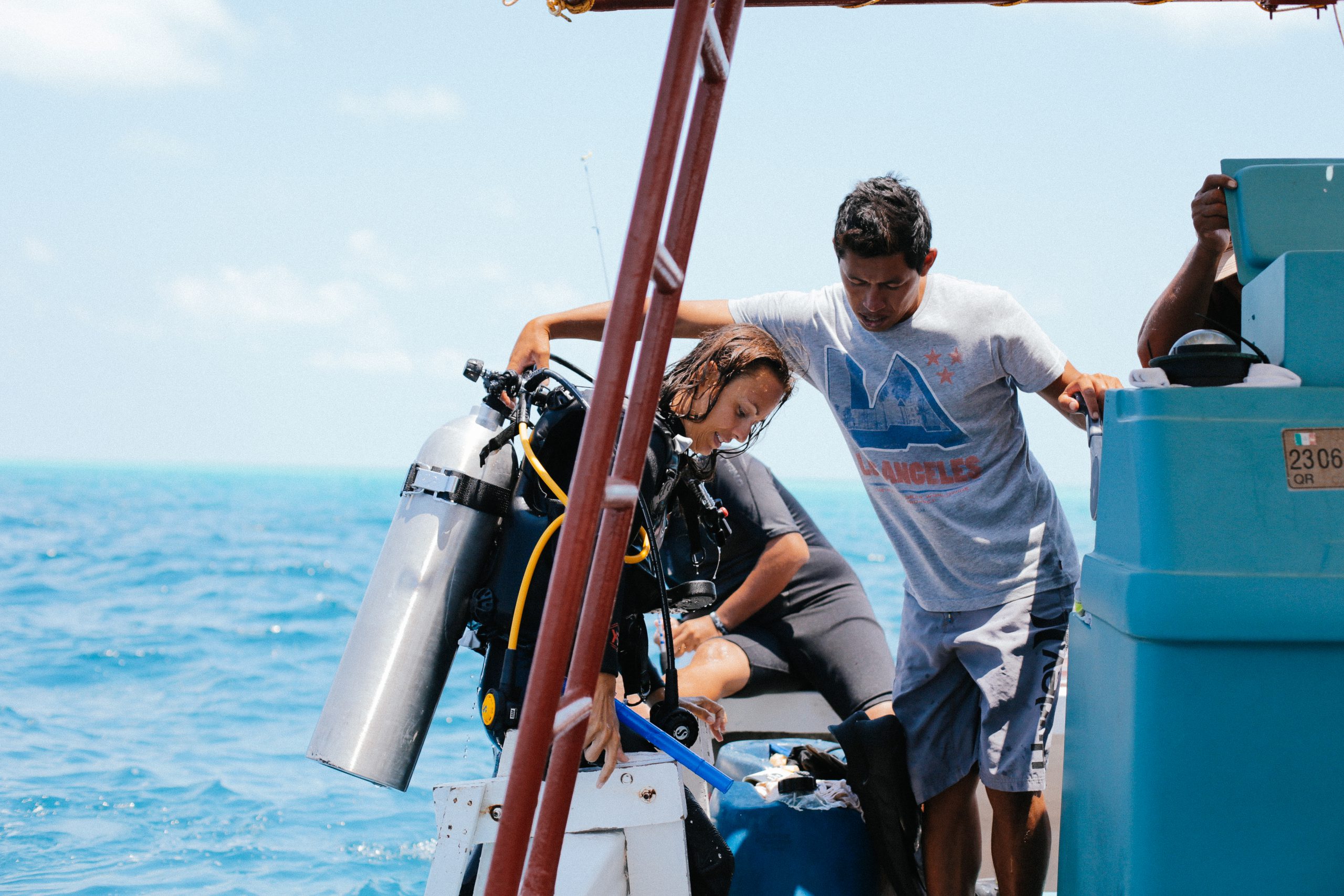
Freediving vs. Scuba Diving: Which One Is Right for You?
Takata Experience | November 2025
Both freediving and scuba diving offer incredible ways to explore the ocean, but they’re very different in style, training, and experience. While scuba diving lets you breathe underwater using a tank, freediving is all about holding your breath and diving on a single lungful of air.
So, how do you decide which one is right for you? Let’s dive into the differences.
1. Breathing: Tank or Lungs?
- Scuba diving uses a tank and regulator to let you breathe underwater for extended periods. You descend slowly and stay at depth depending on your air supply.
- Freediving relies on breath-holding. You dive down, explore, and resurface—all in one breath.
Key takeaway: If you enjoy long, relaxed exploration, scuba might be your match. If you love control, discipline, and pushing your limits, freediving may be more appealing.
2. Equipment Requirements
- Scuba divers need more gear: tank, BCD, regulator, pressure gauge, weights, and often a wetsuit.
- Freedivers keep it minimal: mask, snorkel, fins, weights, and sometimes a wetsuit.
Bonus: Less gear in freediving means quicker prep, easier travel, and a more natural feel in the water.
3. Training and Certification
- Scuba diving requires certification (like PADI Open Water) before going deeper than 12 meters. Training includes theory, confined water skills, and open water dives.
- Freediving also has structured training, such as the PADI Freediver course, which focuses on breathing, relaxation, and dive technique.
Explore our Discover Scuba Diving at Takata Experience ⬇︎
4. Depth and Time Underwater
- Scuba allows longer bottom times and deeper dives depending on your level (often 18–30 meters for recreational divers).
- Freediving depth and time are limited by your breath-hold capacity—beginners often reach 10–20 meters for 1–2 minutes.
Tip: While scuba gives you more time to observe, freediving feels more like flying underwater.
5. Environmental Impact
Both sports can be low-impact, but:
- Freediving has less equipment, meaning reduced risk of disturbing marine life or damaging coral.
- Scuba divers must be careful with buoyancy control and equipment placement.
Want to learn how to dive responsibly? Check out our eco diving courses ⬇︎
6. Physical & Mental Experience
- Scuba is more relaxed and lets you focus on exploring with minimal effort once underwater.
- Freediving requires strong mental focus, body awareness, and control over your breathing and emotions.
Both improve your connection with the ocean, but in very different ways.
Why Not Try Both?
At Takata Experience, we offer both scuba and freediving courses. You don’t have to choose one forever, many divers enjoy doing both depending on the environment and activity.
Contact us today to begin your scuba diving journey with our certified instructors in Mahahual!
Frequently Asked Questions
Neither is better — it depends on your goals. Scuba diving lets you explore deeper for longer with no breath-holding required, while freediving offers a more silent, minimalist experience closer to how marine life moves. Many divers enjoy both.
Both are safe when practiced correctly with proper training. Scuba carries risks like decompression sickness, while freediving risks include shallow water blackout. The key for both is never diving alone and always learning from a certified instructor.
Scuba diving is generally easier to start since you breathe normally underwater. Freediving requires learning breath-hold techniques and relaxation, which takes more mental practice. A beginner scuba course typically takes 3 to 4 days to complete.
No — freediving after scuba is not recommended. Residual nitrogen in your body from scuba can cause decompression sickness if you then freedive. Most agencies advise waiting at least 12 to 24 hours after your last scuba dive before freediving.
Freediving often results in closer wildlife encounters. Without the noise of scuba equipment and bubbles, marine animals are far less startled. Dolphins, sharks and mantas in particular tend to approach freedivers much more naturally and curiously.
Scuba divers typically dive to 18 to 40 meters recreationally, while trained freedivers can reach 20 to 40 meters on a single breath. The world record for freediving is over 200 meters, but most beginners comfortably reach 5 to 10 meters.